
Before any flight, every passenger faces the same practical question: are there items banned on airplanes, and if so, which ones? The topic of items banned on airplanes is no longer as simple as it was a few years ago. Starting in the summer of 2025, the European Union significantly modified the regulatory framework, and the list of items banned on airplanes differs even from one airport to another, including in Romania.
This guide summarizes the regulations in force in 2026, with references to official sources.
Why Proper Information Matters Before Flying?
A poorly prepared bag means, in the best-case scenario, items confiscated at the security checkpoint. In the worst case, it means delays, fines, or problems upon entry into the destination country. The list of items banned on airplanes depends not only on the airline but, first and foremost, on the national legislation of the country you are departing from and the one you are landing in.
The European Framework: What Changed in 2024–2025?
The European Commission maintains a common list of items banned on airplanes within EU territory, published by the Directorate-General for Mobility and Transport (DG MOVE), for both carry-on and checked baggage.
In September 2024, after a brief period of relaxation, the classic rule of 100 ml per container for liquids was reintroduced in the EU, including at airports equipped with new-generation scanners (EDSCB / C3). The reason: a technical report submitted to the European Civil Aviation Conference (ECAC) showed that the software of C3 scanners did not reliably guarantee the detection of explosives in containers larger than 330 ml.
In July 2025, the Commission revised the decision: airports equipped with certified C3 scanners may once again allow the transport of liquids in containers of up to 2 liters, and passengers are no longer required to remove laptops or tablets from their bags. However, the exception is not automatic — each airport must be individually certified.
The Situation in Romania: Two Different Regimes, 17 Airports
For journeys beginning at a Romanian airport, the official source is the Romanian Intelligence Service, the body responsible for civil aviation security.
Passengers starting their journey at the “Henri Coandă” Bucharest International Airport, Bucharest Băneasa “Aurel Vlaicu”, “Avram Iancu” Cluj-Napoca, and Sibiu airports may transport liquids, aerosols, and gels (LAGs) in their carry-on baggage in containers of up to 2 liters. The rule does not apply to transit passengers, who remain subject to the classic 100 ml rule.
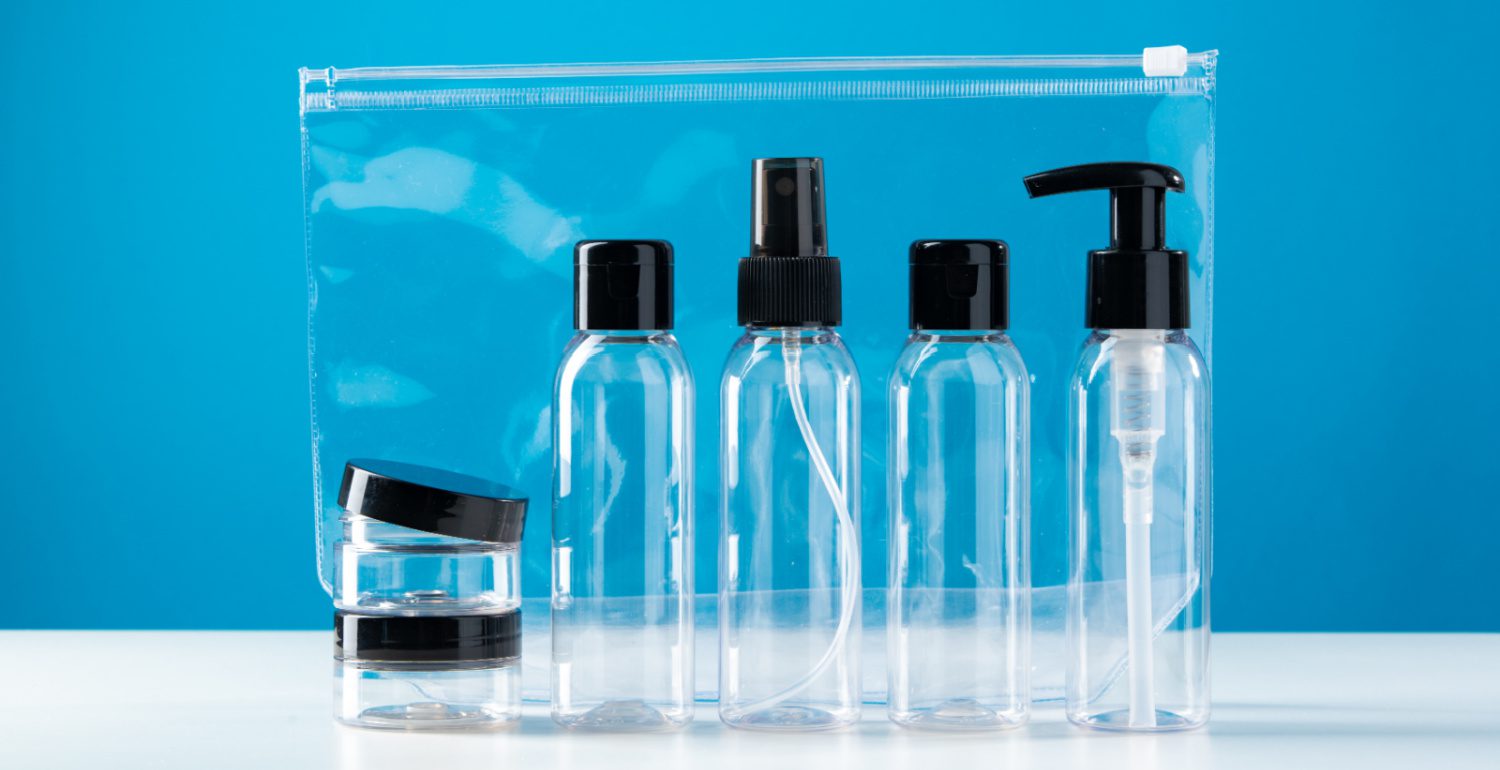
At the remaining airports — Timișoara, Iași, Craiova, Constanța, Bacău, Suceava, Târgu Mureș, Oradea, Brașov-Ghimbav, Baia Mare, Satu Mare, Arad, and Tulcea — the 100 ml-per-container limit applies, placed in a transparent, resealable bag of maximum 1 liter. The exceptions remain medications, baby food, and products sealed in STEB bags.
The Essential List: Items Banned on Airplanes
Beyond the liquids rule, there are entire categories of items banned on airplanes, regardless of the airport. The most relevant are summarized by DG MOVE in the list for carry-on baggage and the list for checked baggage.
The following may not be carried in hand luggage: weapons and objects that imitate them; sharp objects (knives, scissors with blades over 6 cm, razor blades, screwdrivers); paralyzing sprays; work tools usable as weapons. Regardless of the type of baggage, explosive and flammable materials are completely banned: fireworks, firecrackers, ammunition, pressurized cylinders, aerosol paints, and acids.
External Batteries and Electronics: Stricter Rules
A major change in 2025–2026 concerns lithium batteries and power banks, which have entered the list of items banned on airplanes under certain conditions:
- power banks may be transported exclusively in carry-on baggage;
- the standard limit is 100 Wh (≈27,000 mAh at 3.7 V); 100–160 Wh requires operator approval; over 160 Wh is prohibited.
In addition, the Lufthansa Group — which includes Lufthansa, Eurowings, Swiss, Austrian Airlines, Brussels Airlines, Discover Airlines, Edelweiss, and Air Dolomiti — has banned the use and charging of power banks during the flight. Similar measures have been introduced by Emirates, Singapore Airlines, Korean Air, and Qantas.
Unexpected Local Rules: The Case of Switzerland
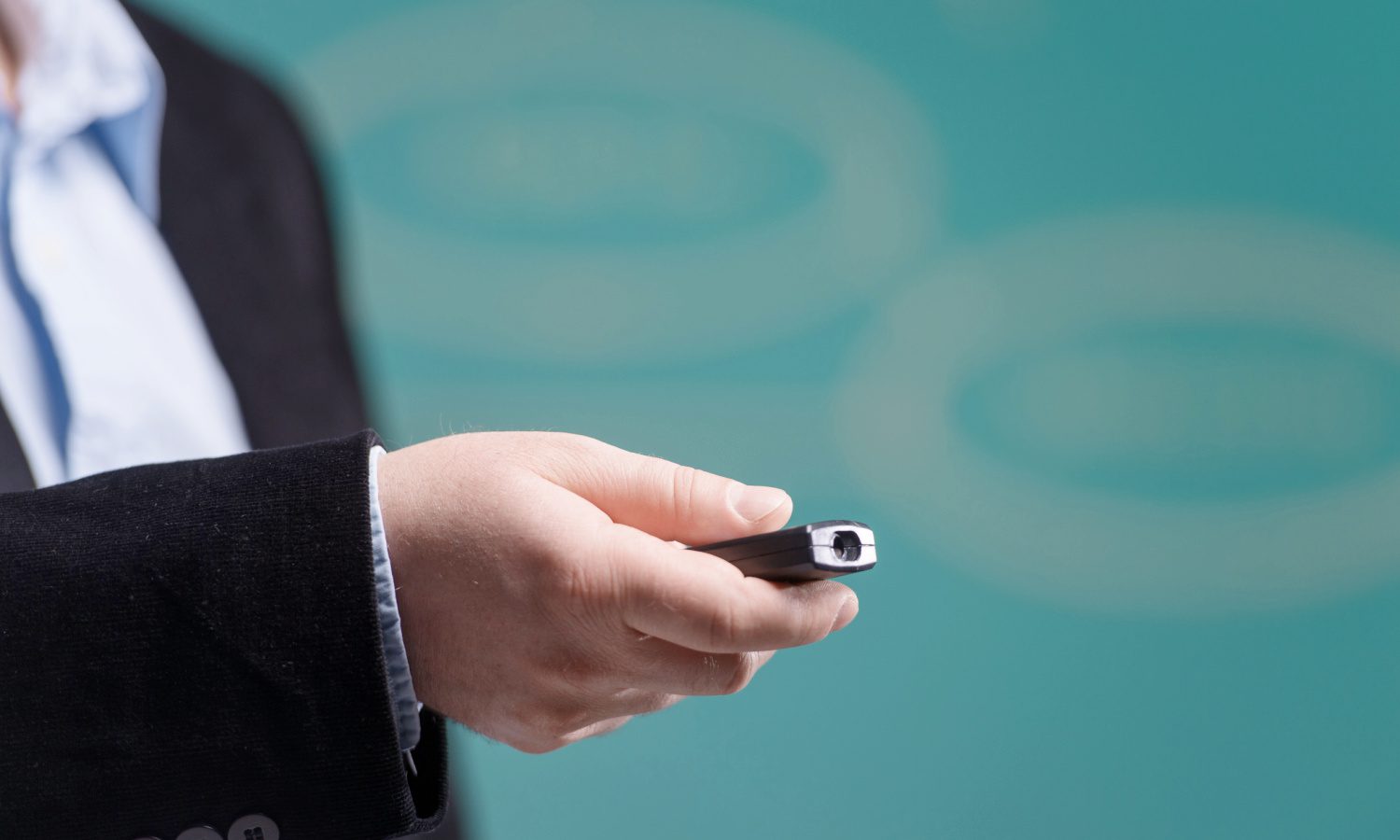
Items banned on airplanes are only part of the issue. Equally important are the restrictions applicable on the ground. In Switzerland, since June 1, 2021, only Class 1 laser pointers are allowed, and the import, transit, offering, and possession of pointers in classes 1M, 2, 2M, 3R, 3B, and 4 are prohibited.
The Permanent Mission of Switzerland to the United Nations Office in Geneva specifies that although these devices are not banned on board aircraft, they remain prohibited on Swiss territory, may be seized by customs, and passengers may be investigated and criminally prosecuted. A simple presentation pointer can lead to serious legal consequences.
For Flights to the United States
For entry into the U.S., the rules are set by the Transportation Security Administration (TSA). The official TSA website offers a searchable list of items banned on airplanes and includes additional restrictions on fresh food products, sporting equipment, and certain electronic devices. For 2026, the TSA has added hair straighteners and curling irons with gas cartridges, considered a fire risk.
Practical Pre-Departure Checklist
- Consult the list of items banned on airplanes published by DG MOVE for intra-EU flights.
- Check the departure airport’s website for the specific regime regarding liquids.
- Read the airline’s dedicated baggage page.
- For non-EU destinations, consult the national civil aviation security authority.
- Place all devices with lithium batteries in your carry-on baggage and check the Wh labels.
Conclusion
The list of items banned on airplanes has become more complex over the past two years and will likely continue to change. The “better safe than sorry” principle remains valid: ten minutes spent on the airport’s and airline’s website save you from confiscated items, additional checks, sanctions at your destination, and even serious legal problems.