
For a long flight, how you feel after landing may be the most important thing of all. The difference between an exhausting trip and a comfortable one can be the difference between a productive day and one spent trying to recover—something that is often impossible when your schedule is packed from the moment you arrive.
When packing your carry-on, resist the temptation to bring too much, but don’t reduce everything to the bare essentials only to discover, at 30,000 feet, that those “small items” are exactly what you need most. In reality, a few carefully chosen accessories take up very little space, are easy to reach during the flight, and can make a significant difference in your comfort.
Here are six things worth having with you on board for a long flight:
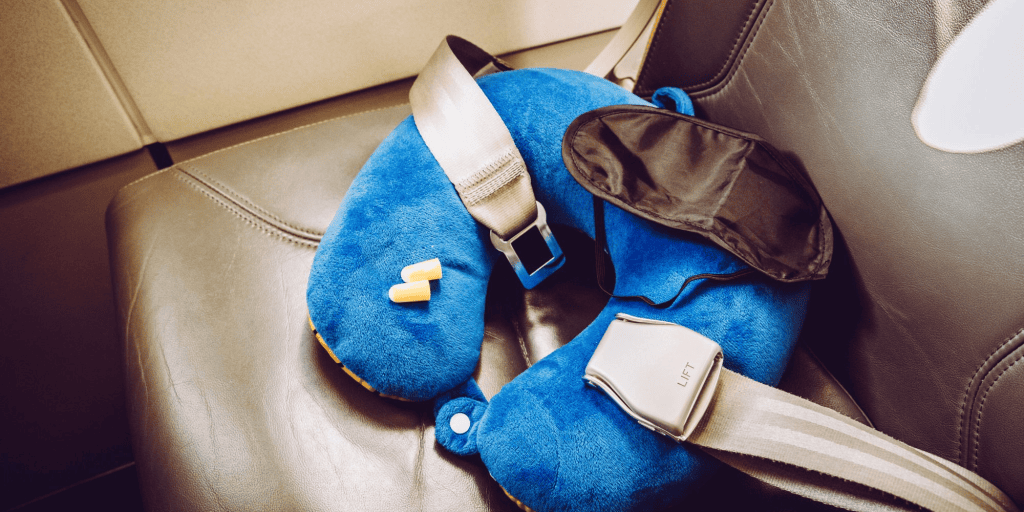
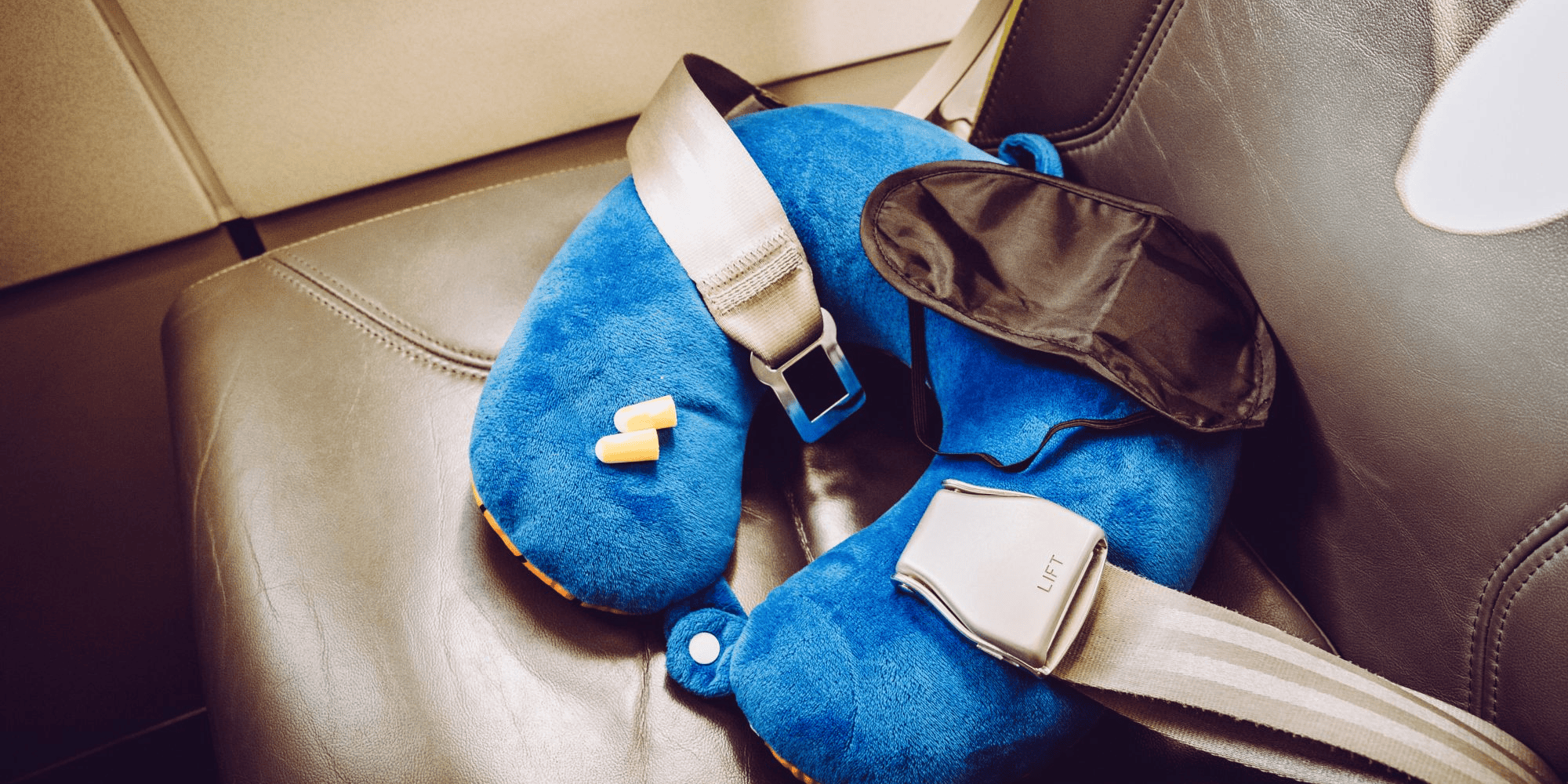
1. A travel pillow.
Few accessories offer such a good balance between size and comfort. Inflatable models take up very little space and can be ready to use within seconds, while memory foam pillows provide better support for your neck, even though they require a little more room in your bag.
Their purpose is simple: they keep your head from falling forward or sideways while you sleep, one of the main causes of neck pain and stiffness after an international flight. If you regularly sleep on planes, look for a model that supports both your neck and chin.
2. Compression socks.
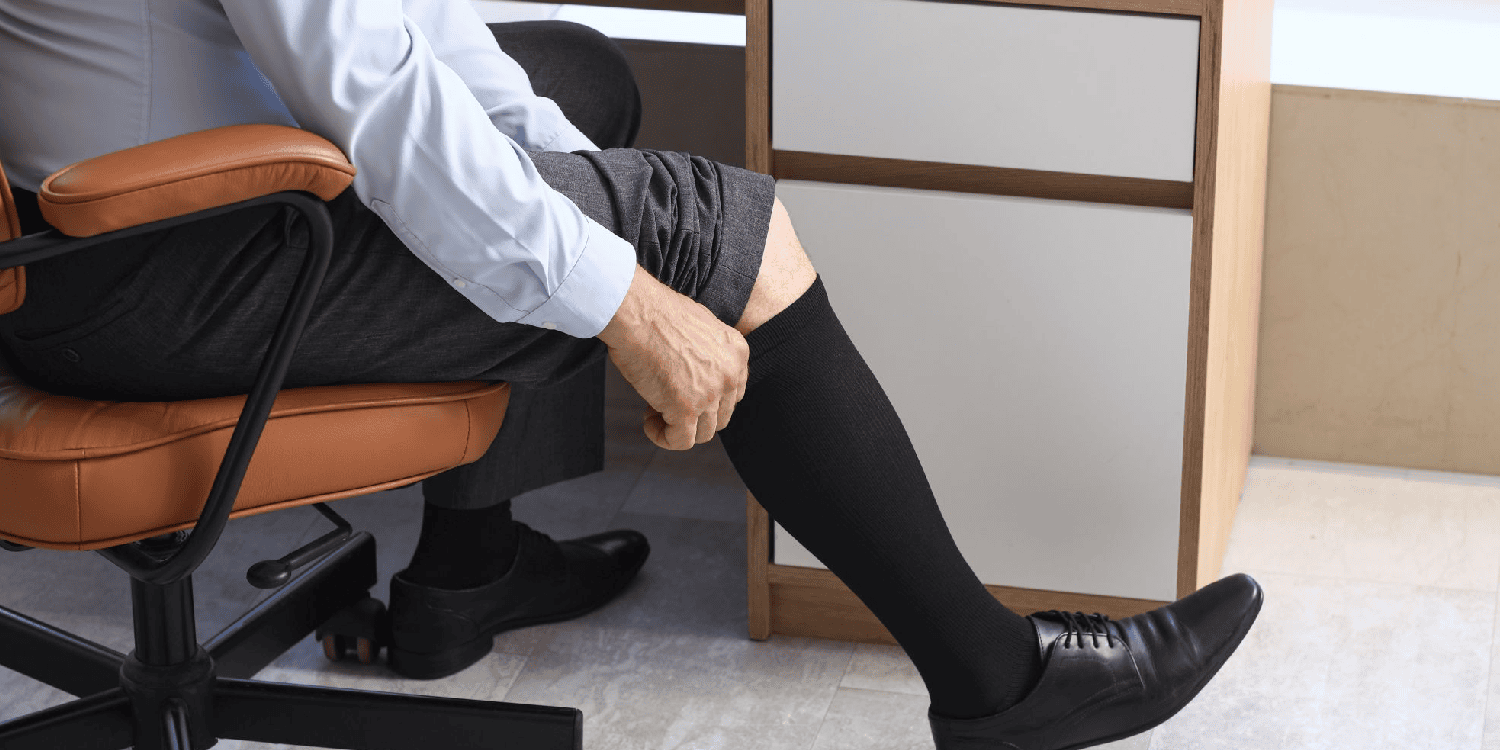
Of all the items on this list, this is the one backed by the strongest body of medical research.
A rigorous clinical review published by the Cochrane Library in 2021 concluded, with a high level of certainty, that wearing compression socks reduces the risk of asymptomatic deep vein thrombosis on flights lasting more than four hours. The research also found a reduction in lower-leg edema, with no significant adverse effects.
For frequent travelers who spend many hours sitting, the cost of a pair of compression socks is low compared with the potential benefits. Make sure you choose the right size, and if you have a known circulatory condition, ask your doctor for advice before using them.
3. A sleep mask and earplugs.
The airplane cabin is rarely completely dark, and meal service or the activity of other passengers does not always coincide with the times when you’d like to rest.
A well-designed sleep mask that doesn’t put pressure on your eyes and allows you to blink naturally can help you sleep and may also support faster adjustment to a new time zone. Add a pair of foam earplugs, and you have a considerably quieter environment throughout a long flight, especially when wearing headphones becomes uncomfortable after several hours.
4. Noise-canceling headphones.
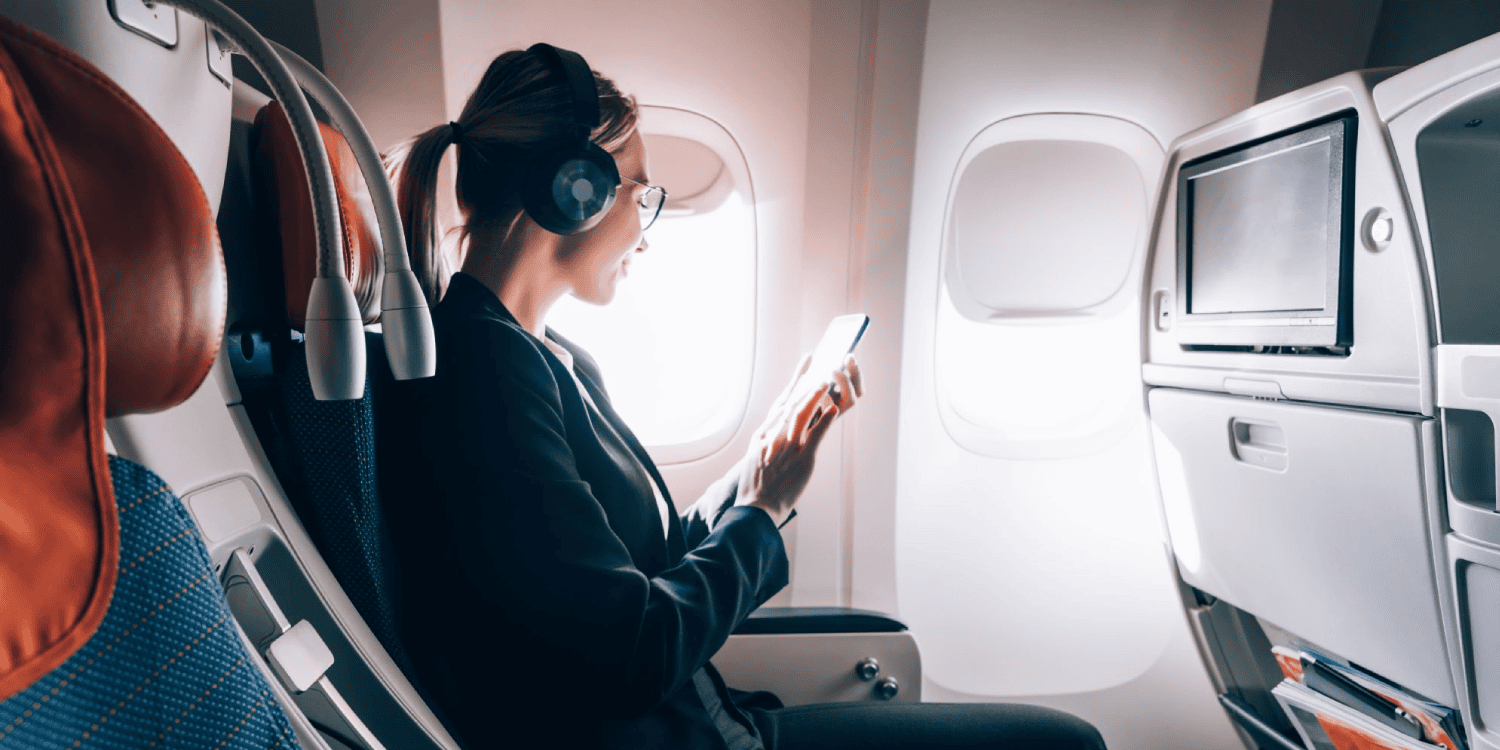
The headphones provided on board are good enough for watching a movie, but they do little to reduce the constant engine noise—one of the factors that contributes most to the fatigue that builds up during a long flight.
Active noise-canceling headphones significantly reduce this background noise and make the journey much more relaxing, whether you’re listening to music, watching a movie, or simply looking for some peace and quiet.
There is one practical detail worth keeping in mind. Most airlines allow Bluetooth connections with a phone in airplane mode, but in-seat entertainment systems still use the traditional 3.5 mm audio jack on many aircraft. To connect wireless headphones to the screen in front of you, you’ll need either an auxiliary cable or a dedicated Bluetooth adapter. Newer aircraft in the fleets of airlines such as Delta, United, and Emirates already offer built-in Bluetooth connectivity on the screen.
5. A power bank, under the 2026 rules.
This is the area that has seen some of the most significant changes in recent years.
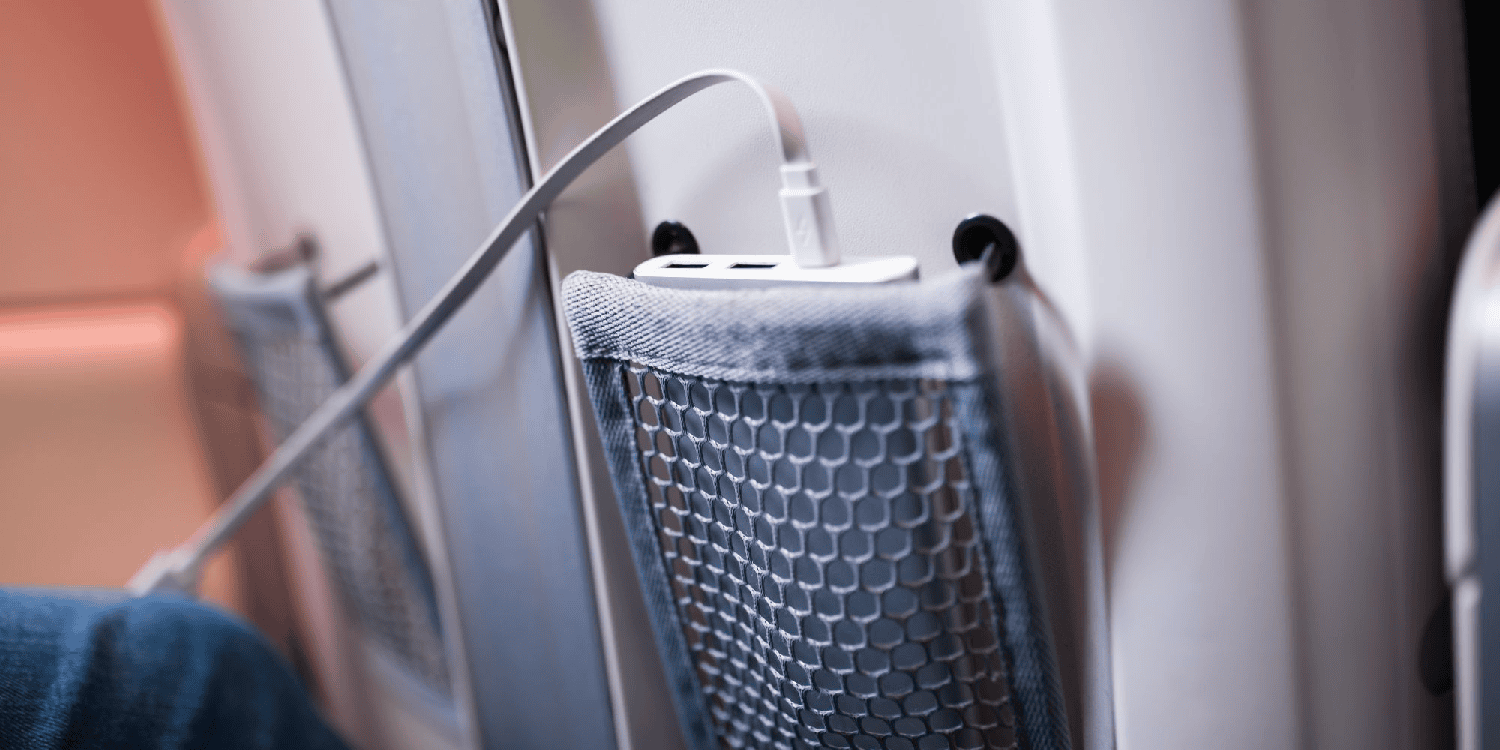
Starting in 2026, international regulations allow passengers to carry a maximum of two power banks, exclusively in their carry-on luggage. They must be stored in the seat pocket, in a bag placed under the seat, or kept on the passenger’s person—not in the overhead bin. Each power bank can have a capacity of up to 100 Wh without prior approval. For power banks with a capacity between 100 and 160 Wh, airline approval is required, while those exceeding 160 Wh are prohibited.
Another important change is that power banks can no longer be charged during the flight using the seat’s power outlet or USB port. They also remain prohibited in checked baggage, without exception.
Before each trip, check your airline’s policy as well, since some carriers apply stricter rules. For complete details, see our guide to items prohibited on airplanes.
6. Snacks, water, and a little planning.
What you eat during a long flight can have a bigger impact on your comfort than you might expect. Snacks that are high in protein and low in simple carbohydrates, such as nuts, almonds, or bars with no added sugar, provide steady energy and help reduce hunger between meals served on board.
It’s best to choose packaged products and open them after boarding, avoiding potential questions at security.
When it comes to carrying liquids, the rules have been partially relaxed. Passengers departing from Henri Coandă, Băneasa, Cluj-Napoca, and Sibiu airports can carry containers of liquids of up to 2 liters in their carry-on luggage, thanks to the installation of new-generation scanners. This facility is not available to passengers in transit, while the 100 ml limit per container remains in effect at other airports in Romania, with liquids carried in a transparent one-liter bag.
Regardless of your departure airport, staying hydrated remains essential. The air inside an airplane cabin is very dry, and drinking water regularly can make a significant difference to your comfort during the flight and after landing.
Key takeaway.
Comfort on a long flight isn’t about how big your carry-on is, but how thoughtfully you pack it. The six items above take up very little space, but they can make the difference between an exhausting journey and one that leaves you rested and ready for whatever comes next.
For business travel, the Aerotravel team provides end-to-end travel solutions, from booking your flights to arranging travel insurance, so the only thing left to decide is what to put in your carry-on.